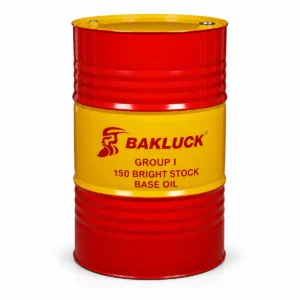
The 150N designation of BAKLUCK Group I 150N Base Oil is supported by a concrete set of typical measurements. Among them are kinematic viscosity at 100 °C of 6±0.5 mm²/s by ASTM D445, viscosity index of 85 by ASTM D2270, and coking tendency, maximum of 0.1 %. These values position the solvent-refined mineral base oil for technical comparison in general industrial and circulating-oil development, and they offer a starting point for monograde engine-oil formulation studies. Selection should remain application-led: operating temperature, additive solubility, seal materials, oxidation control and finished-fluid requirements all need laboratory confirmation. Review the proposed formulation against current technical documentation, then verify batch-specific values on the BAKLUCK COA before commercial acceptance.
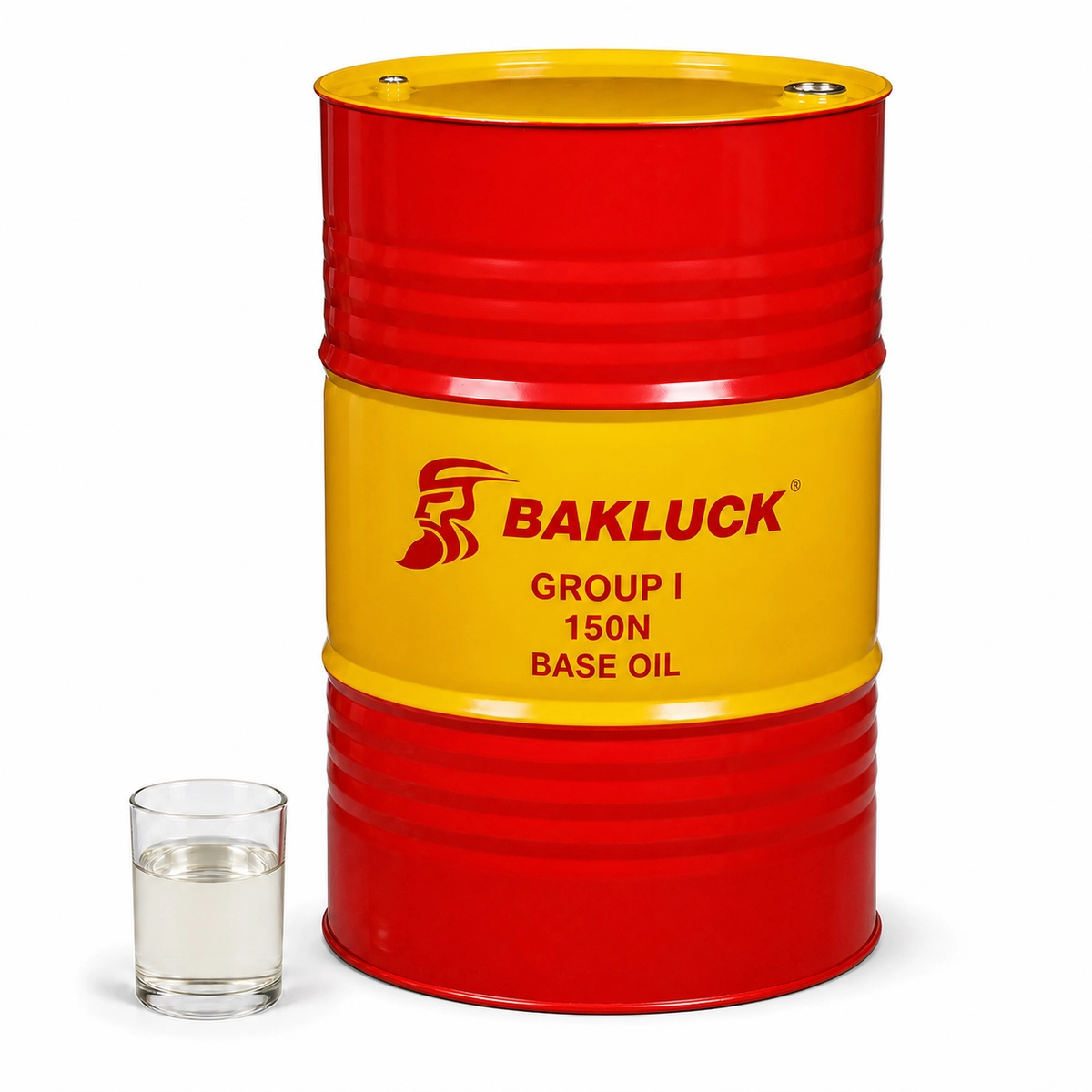
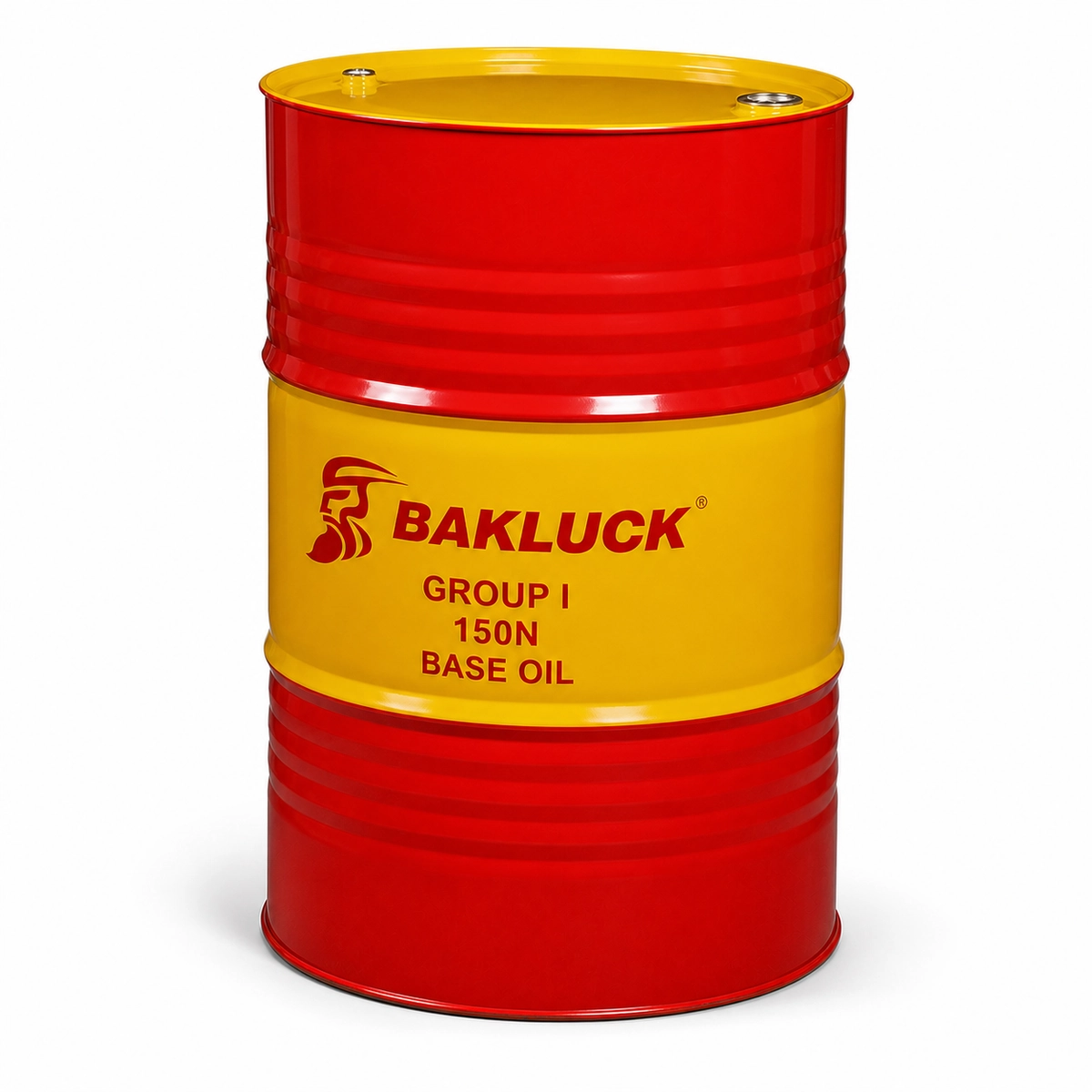
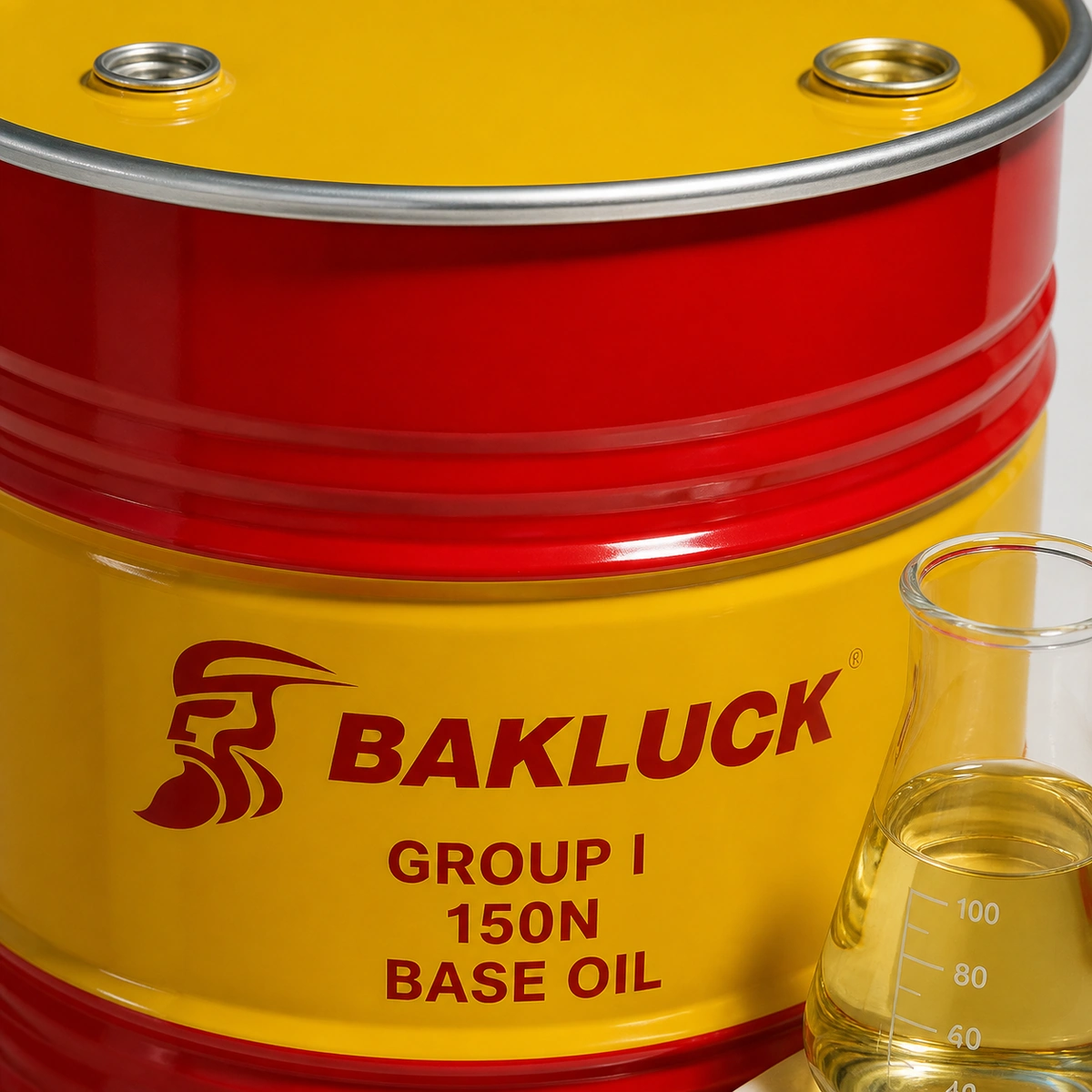
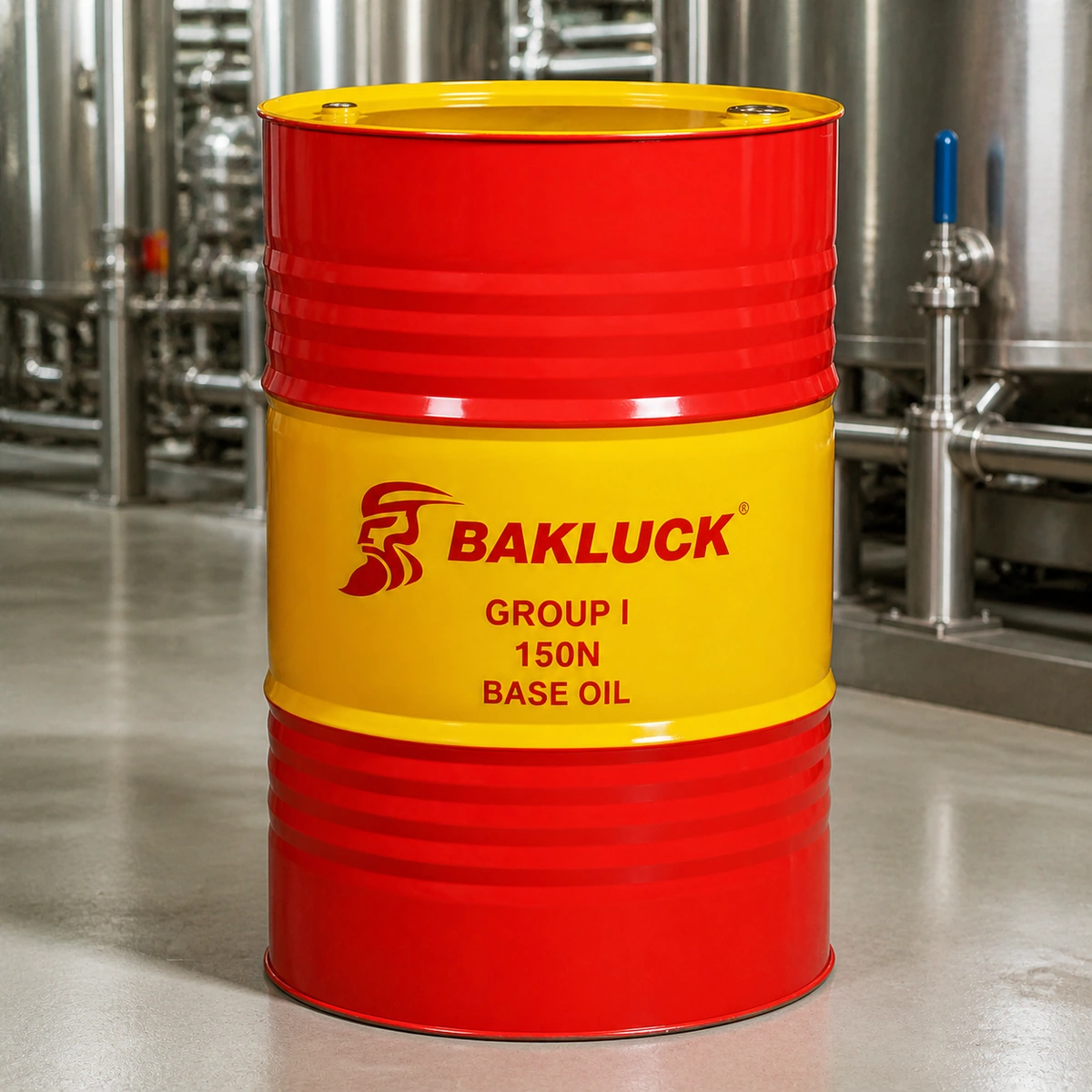
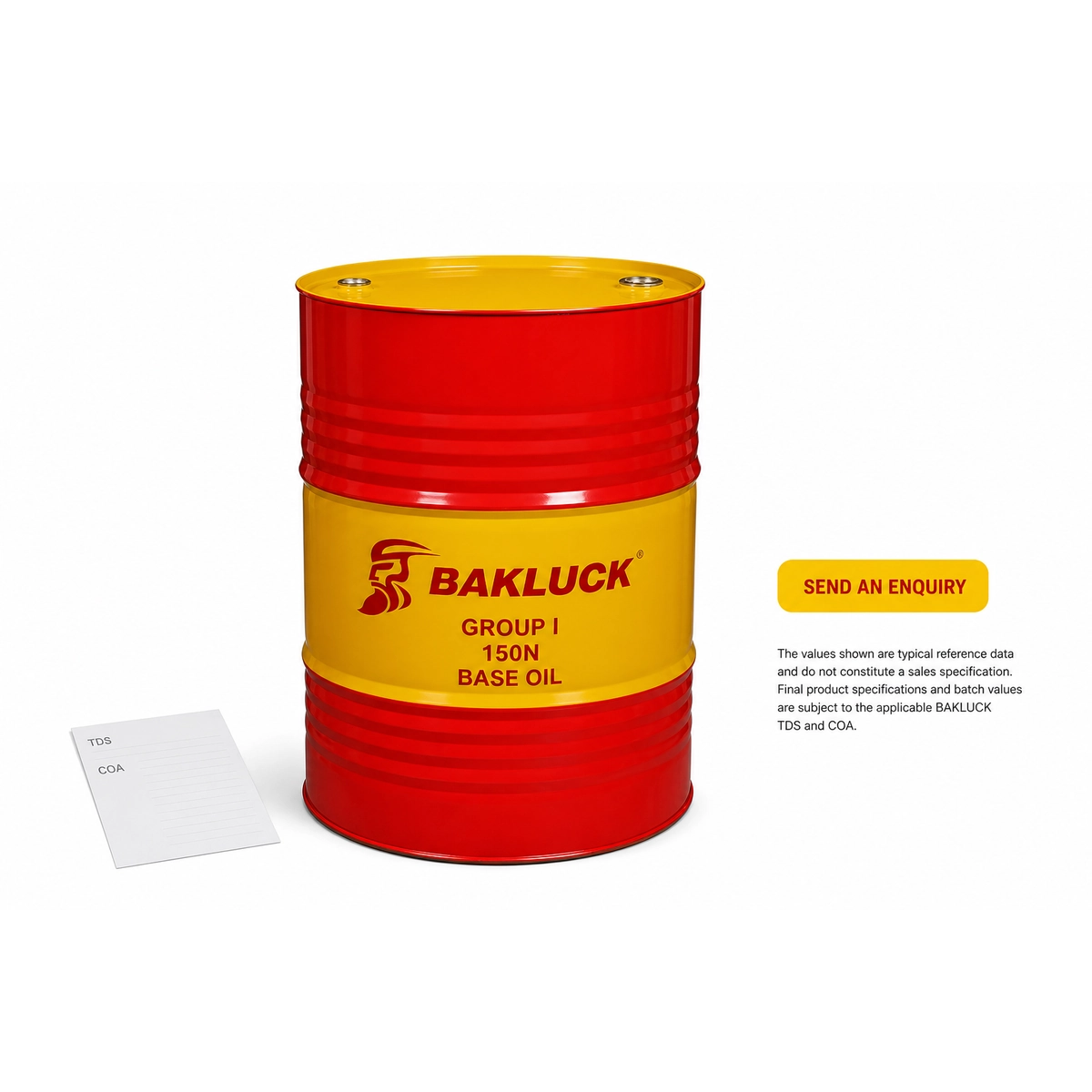
Group I 150N Base Oil
Selection work for general industrial and circulating-oil development may compare Group I 150N Base Oil through its reported 6±0.5 mm²/s 100 °C viscosity.
Product overview
The 150N designation of BAKLUCK Group I 150N Base Oil is supported by a concrete set of typical measurements. Among them are kinematic viscosity at 100 °C of 6±0.5 mm²/s by ASTM D445, viscosity index of 85 by ASTM D2270, and coking tendency, maximum of 0.1 %. These values position the solvent-refined mineral base oil for technical comparison in general industrial and circulating-oil development, and they offer a starting point for monograde engine-oil formulation studies. Selection should remain application-led: operating temperature, additive solubility, seal materials, oxidation control and finished-fluid requirements all need laboratory confirmation. Review the proposed formulation against current technical documentation, then verify batch-specific values on the BAKLUCK COA before commercial acceptance.
Typical reference values
| Property | Typical value | Method |
|---|---|---|
| Kinematic viscosity at 100 °C | 6±0.5 mm²/s | ASTM D445 |
| Viscosity index | 85 | ASTM D2270 |
| Coking tendency, maximum | 0.1 % | |
| Acid number | 0.02 mg KOH/g | ASTM D974 |
| Ash | 0.005 % | ASTM D482 |
| Mechanical impurities | Nil | |
| Water content | Nil ppm | ASTM D95 |
| Flash point (COC), minimum | 190 °C | ASTM D92 |
| Pour point, maximum | -15 °C | ASTM D97 |
| Color, maximum | 4.5 | ASTM D1500 |
| Sulfur content, maximum | 1 wt% | ASTM D4294 |
| Density at 20 °C | 0.89 g/cm³ | ASTM D4052 |
Applications
- General industrial and circulating-oil development
- Monograde engine-oil formulation studies
Frequently asked questions
What makes Group I 150N Base Oil relevant to general industrial and circulating-oil development?
The grade's 6±0.5 mm²/s 100 °C viscosity may contribute the required viscosity for general industrial and circulating-oil development, but seal, oxidation and finished-fluid checks remain essential.
When is formulation work for Group I 150N Base Oil complete?
For Group I 150N Base Oil, formulation work is complete only when the full blend meets its specification and the proposed commercial batch is documented.
Final specifications are subject to the current TDS and batch COA.
Product Details
The 150N designation of BAKLUCK Group I 150N Base Oil is supported by a concrete set of typical measurements. Among them are kinematic viscosity at 100 °C of 6±0.5 mm²/s by ASTM D445, viscosity index of 85 by ASTM D2270, and coking tendency, maximum of 0.1 %. These values position the solvent-refined mineral base oil for technical comparison in general industrial and circulating-oil development, and they offer a starting point for monograde engine-oil formulation studies. Selection should remain application-led: operating temperature, additive solubility, seal materials, oxidation control and finished-fluid requirements all need laboratory confirmation. Review the proposed formulation against current technical documentation, then verify batch-specific values on the BAKLUCK COA before commercial acceptance.
Additive Technology
International Premium Additive Package