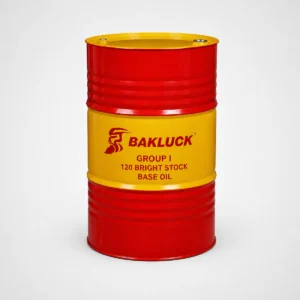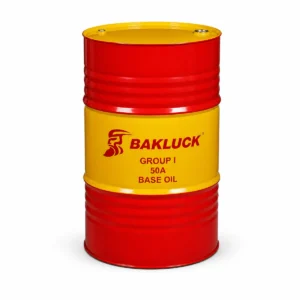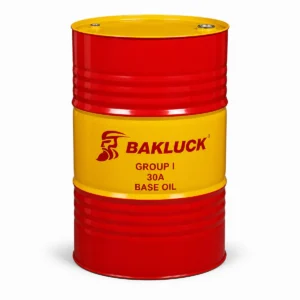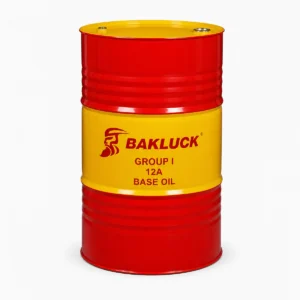
BAKLUCK Group I 40A Base Oil gives lubricant developers a property-led way to assess a 40A solvent-refined mineral base oil. Its source data shows kinematic viscosity at 40 °C of 51.28 cSt; separate entries for kinematic viscosity at 100 °C of 7.16 cSt and acid number of 0.022 mg KOH/g help distinguish it from lower- or higher-viscosity alternatives. The profile warrants investigation for circulating and enclosed-gear oil formulation studies, with industrial-lubricant trials requiring a medium-heavy Group I cut as an additional formulation possibility. Actual suitability depends on the additive package, base-stock blend, elastomers, operating temperatures and target standard. Compare laboratory results with the current BAKLUCK TDS, and use the batch COA—not these typical values—as the batch-specific commercial reference.
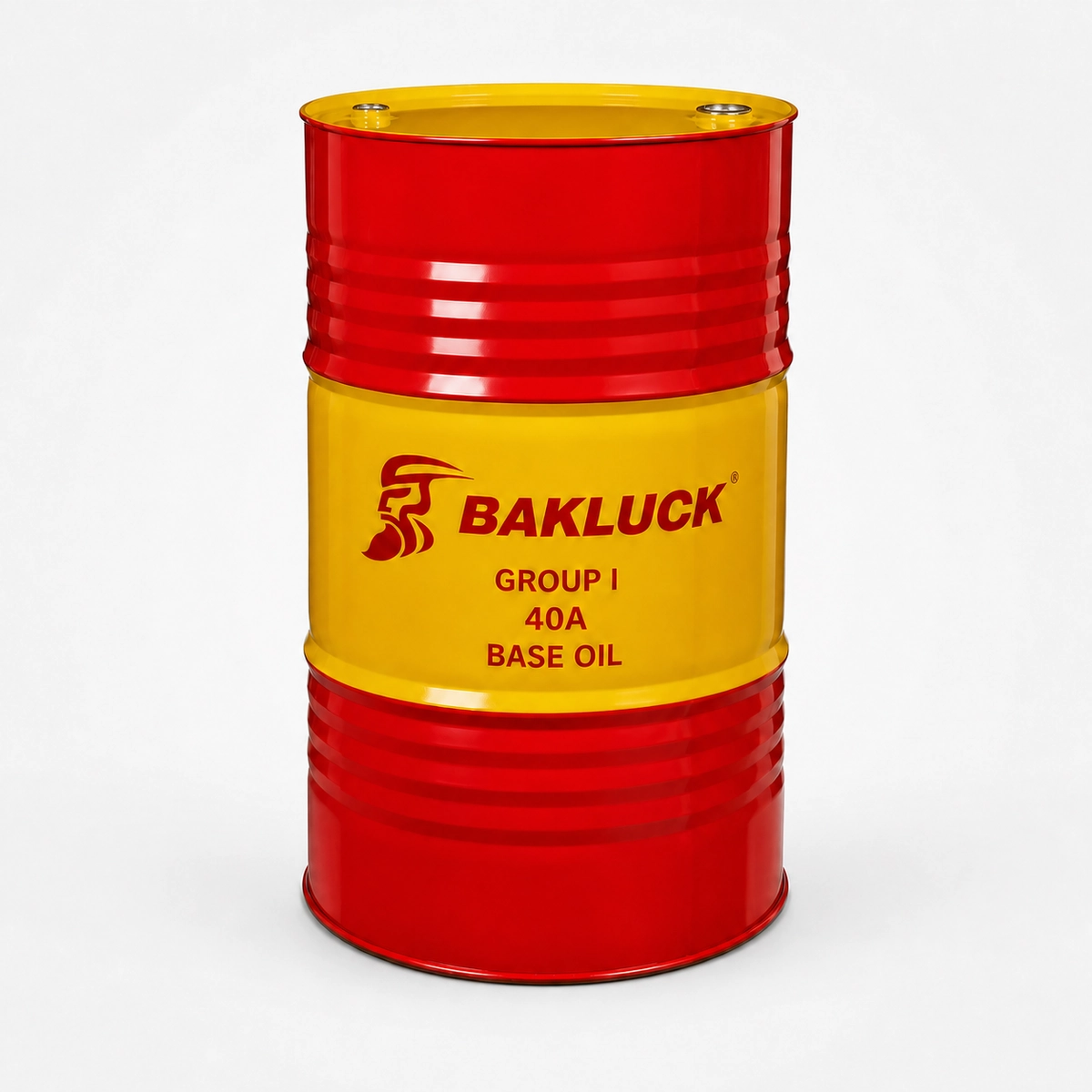
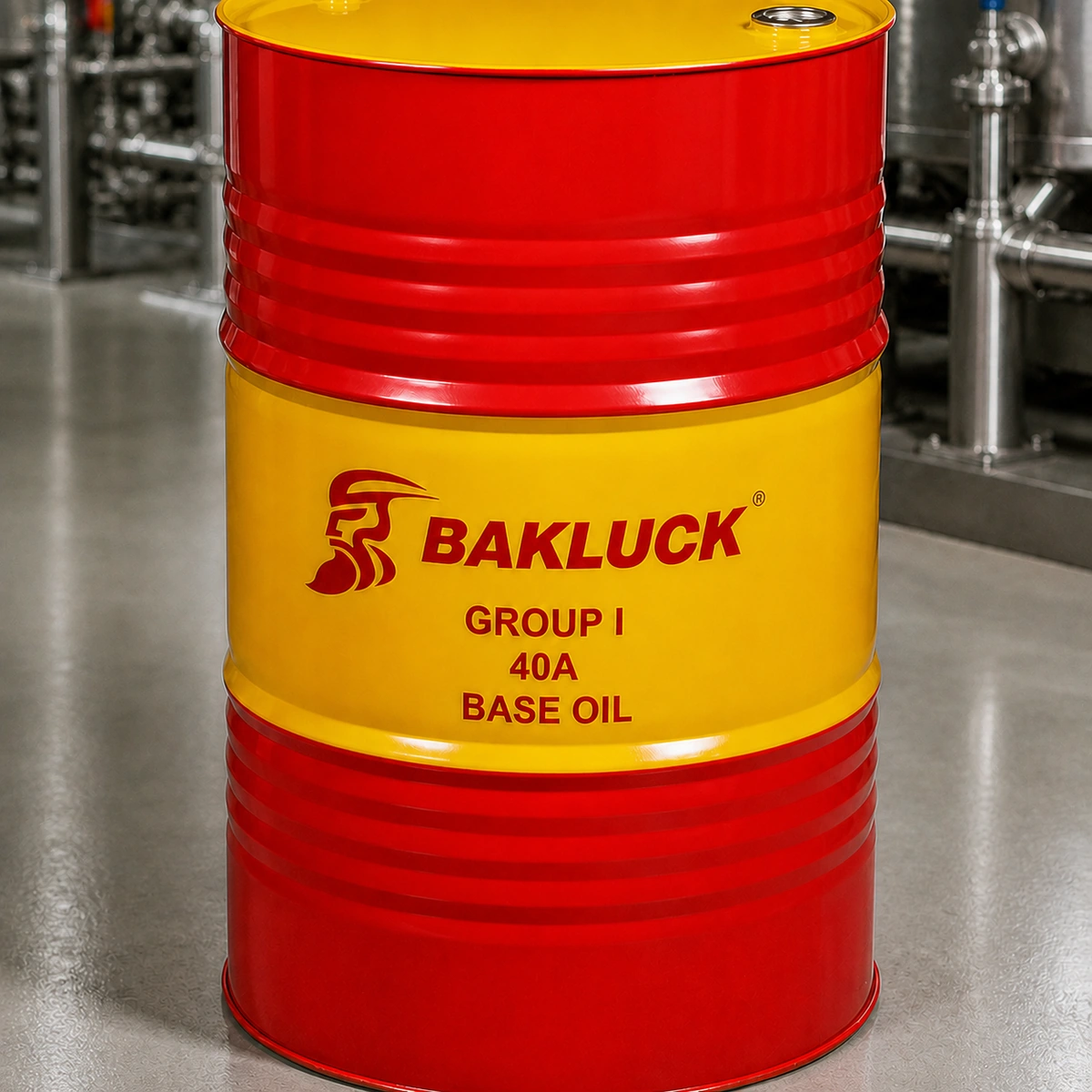
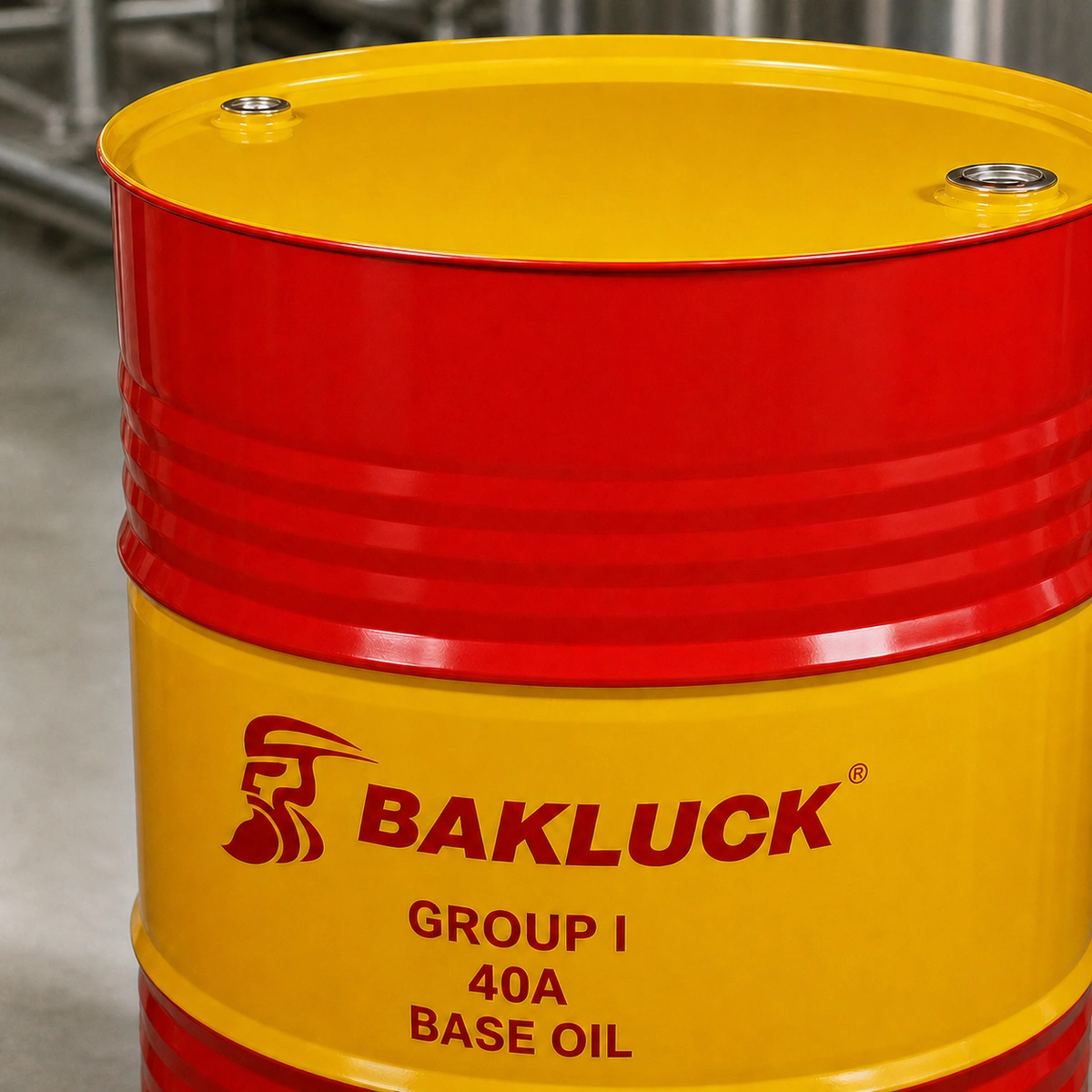
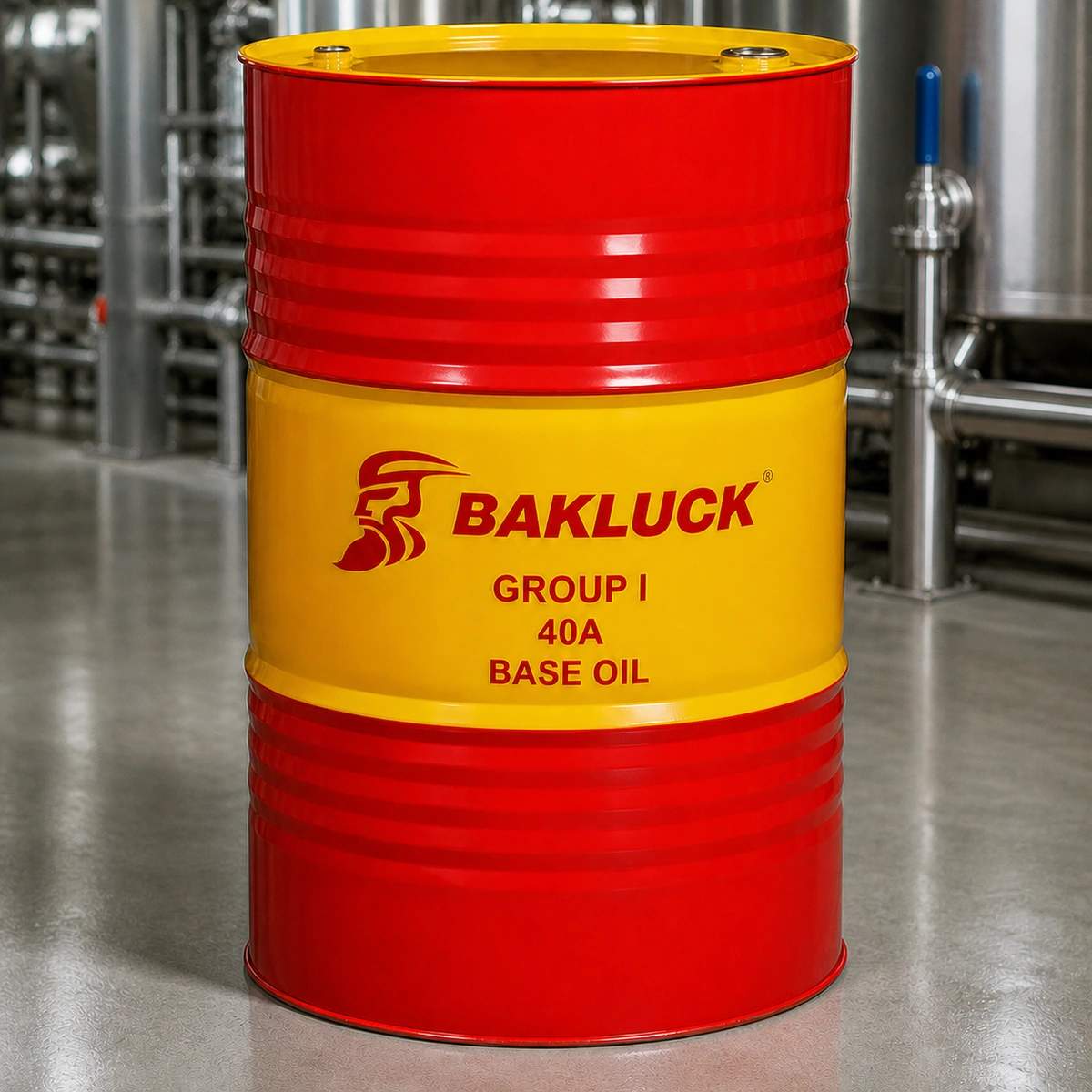
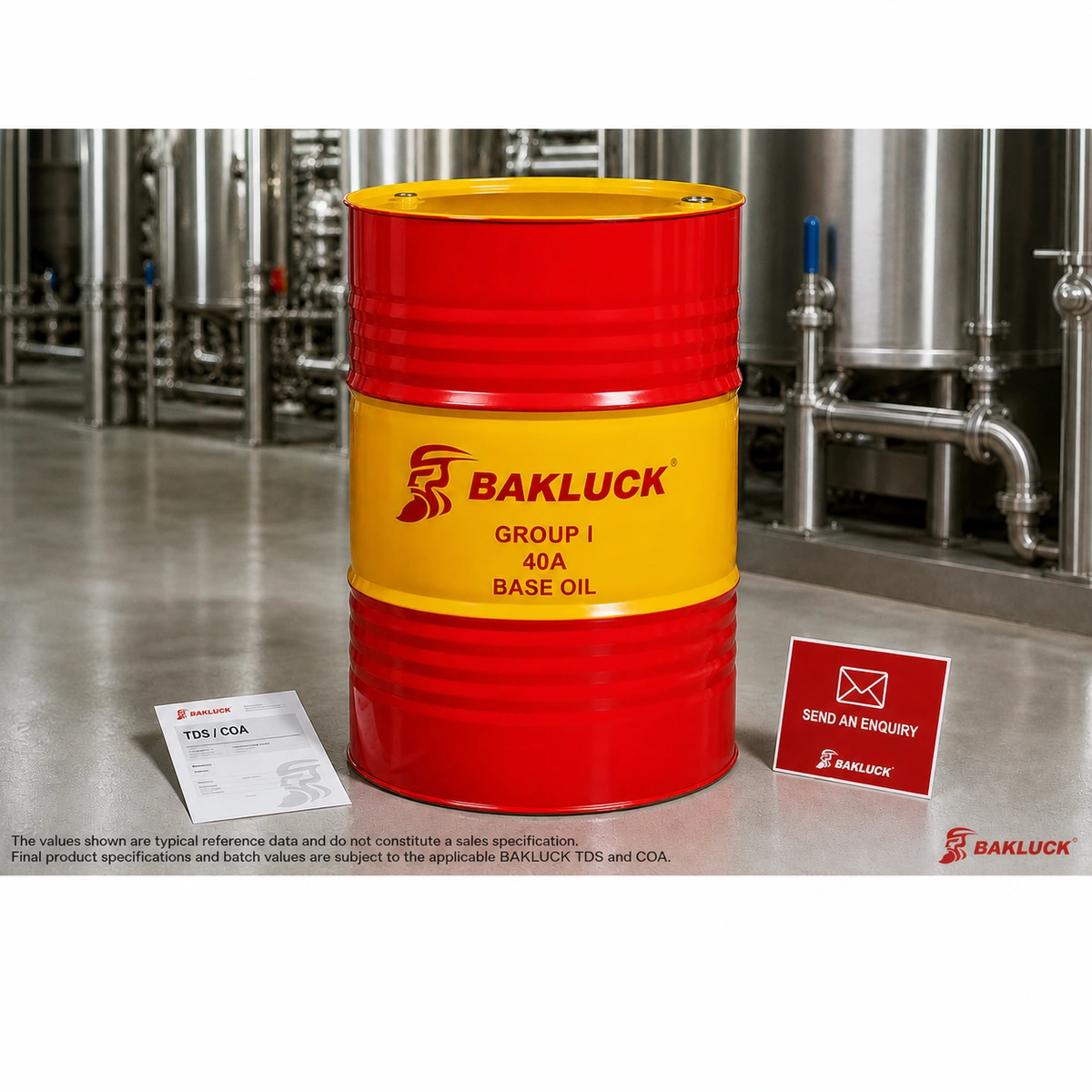
Group I 40A Base Oil
At 7.16 cSt 100 °C viscosity, Group I 40A Base Oil provides a specific viscosity step for teams designing circulating and enclosed-gear oil formulation studies.
Product overview
BAKLUCK Group I 40A Base Oil gives lubricant developers a property-led way to assess a 40A solvent-refined mineral base oil. Its source data shows kinematic viscosity at 40 °C of 51.28 cSt; separate entries for kinematic viscosity at 100 °C of 7.16 cSt and acid number of 0.022 mg KOH/g help distinguish it from lower- or higher-viscosity alternatives. The profile warrants investigation for circulating and enclosed-gear oil formulation studies, with industrial-lubricant trials requiring a medium-heavy Group I cut as an additional formulation possibility. Actual suitability depends on the additive package, base-stock blend, elastomers, operating temperatures and target standard. Compare laboratory results with the current BAKLUCK TDS, and use the batch COA—not these typical values—as the batch-specific commercial reference.
Typical reference values
| Property | Typical value | Method |
|---|---|---|
| Kinematic viscosity at 40 °C | 51.28 cSt | |
| Kinematic viscosity at 100 °C | 7.16 cSt | |
| Acid number | 0.022 mg KOH/g | |
| Ash | 0.002 % | |
| Sulfur content | 1.1 % | |
| Density at 20 °C | 885 kg/m³ | |
| Solidification point | -10 °C | |
| Color | 3.5 | |
| Flash point | 218 °C | |
| Oxidation stability | 0.1 mg KOH/g |
Applications
- Circulating and enclosed-gear oil formulation studies
- Industrial-lubricant trials requiring a medium-heavy Group I cut
Frequently asked questions
What does 7.16 cSt 100 °C viscosity contribute to a review of Group I 40A Base Oil?
The published 7.16 cSt 100 °C viscosity supplies one measured input for evaluating circulating and enclosed-gear oil formulation studies; additive response and durability remain open questions.
Which formulation risks need checking for Group I 40A Base Oil?
For Group I 40A Base Oil, evaluate additive solubility, seal response, temperature behavior and compliance, then review the TDS and applicable COA.
Final specifications are subject to the current TDS and batch COA.
Product Details
BAKLUCK Group I 40A Base Oil gives lubricant developers a property-led way to assess a 40A solvent-refined mineral base oil. Its source data shows kinematic viscosity at 40 °C of 51.28 cSt; separate entries for kinematic viscosity at 100 °C of 7.16 cSt and acid number of 0.022 mg KOH/g help distinguish it from lower- or higher-viscosity alternatives. The profile warrants investigation for circulating and enclosed-gear oil formulation studies, with industrial-lubricant trials requiring a medium-heavy Group I cut as an additional formulation possibility. Actual suitability depends on the additive package, base-stock blend, elastomers, operating temperatures and target standard. Compare laboratory results with the current BAKLUCK TDS, and use the batch COA—not these typical values—as the batch-specific commercial reference.
Additive Technology
International Premium Additive Package