Designed for comparison within ester-based industrial fluids where lubricity and viscosity profile are assessed together, BAKLUCK Oleate Ester 6000 is characterized by more than its commercial grade label. The available table reports density at 20 °C of 0.90 g/cm³ by ASTM D1298, then complements it with kinematic viscosity at 100 °C of 9.5 mm²/s by ASTM D445 and kinematic viscosity at 40 °C of 48 mm²/s by ASTM D445. Those figures can guide early selection for metalworking-fluid formulation studies and frame experimental work on oleate-ester lubricity contribution trials. Because the material is an oleate ester base stock, finished performance will also depend on co-base stocks and additive chemistry. Validate viscosity, volatility, oxidation, materials compatibility and regulatory requirements in the complete formulation. Current BAKLUCK TDS information and the applicable batch COA should be reviewed before procurement approval.
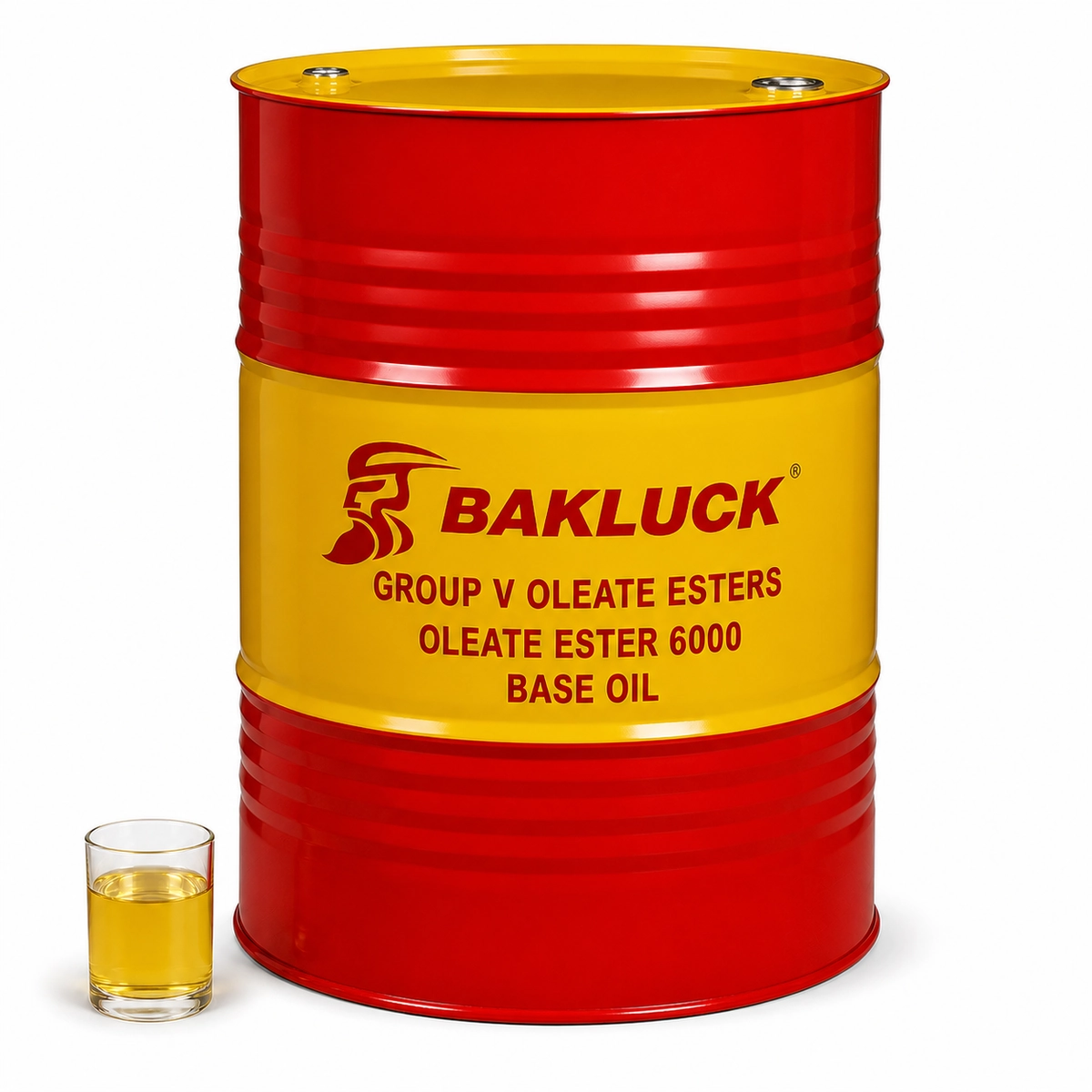
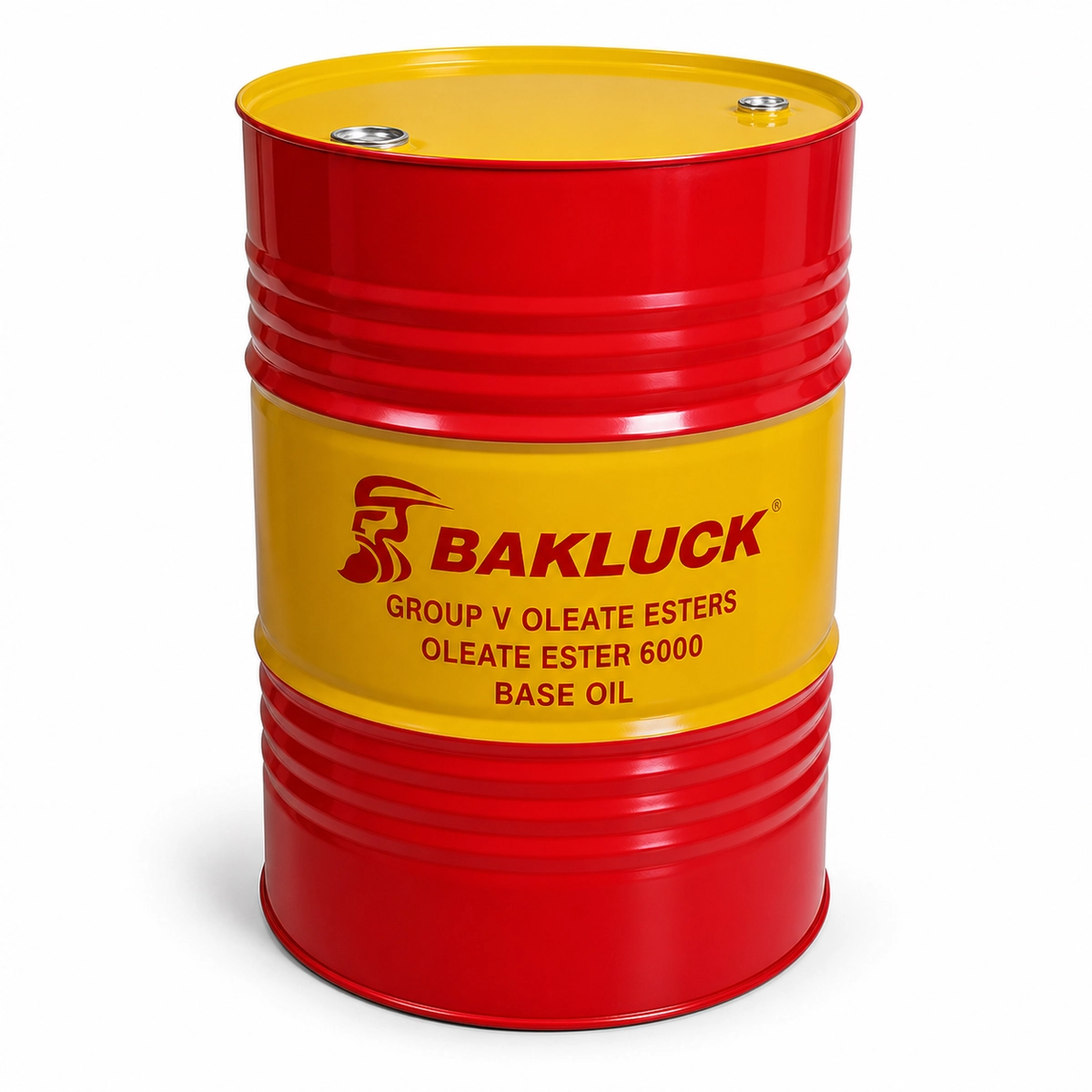
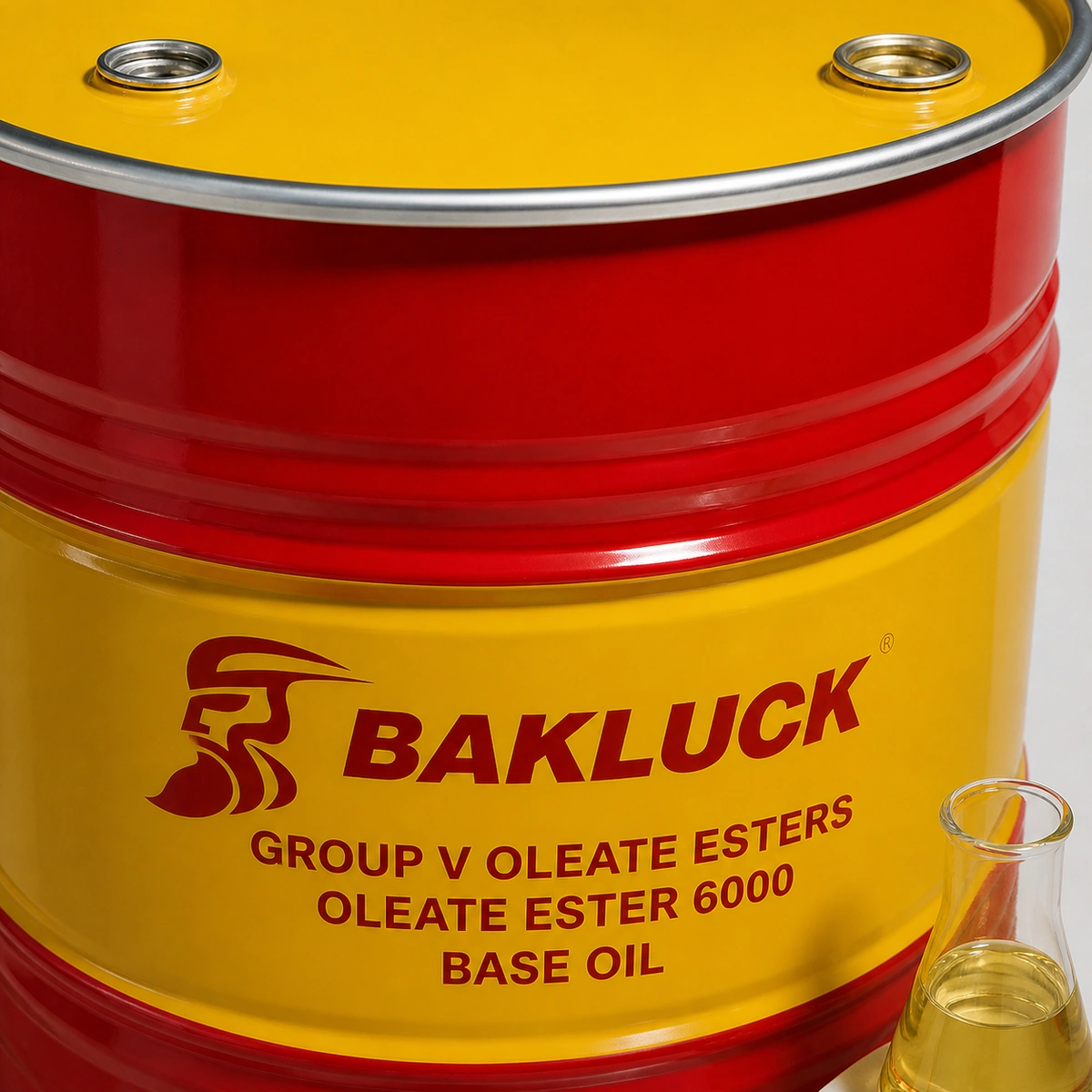
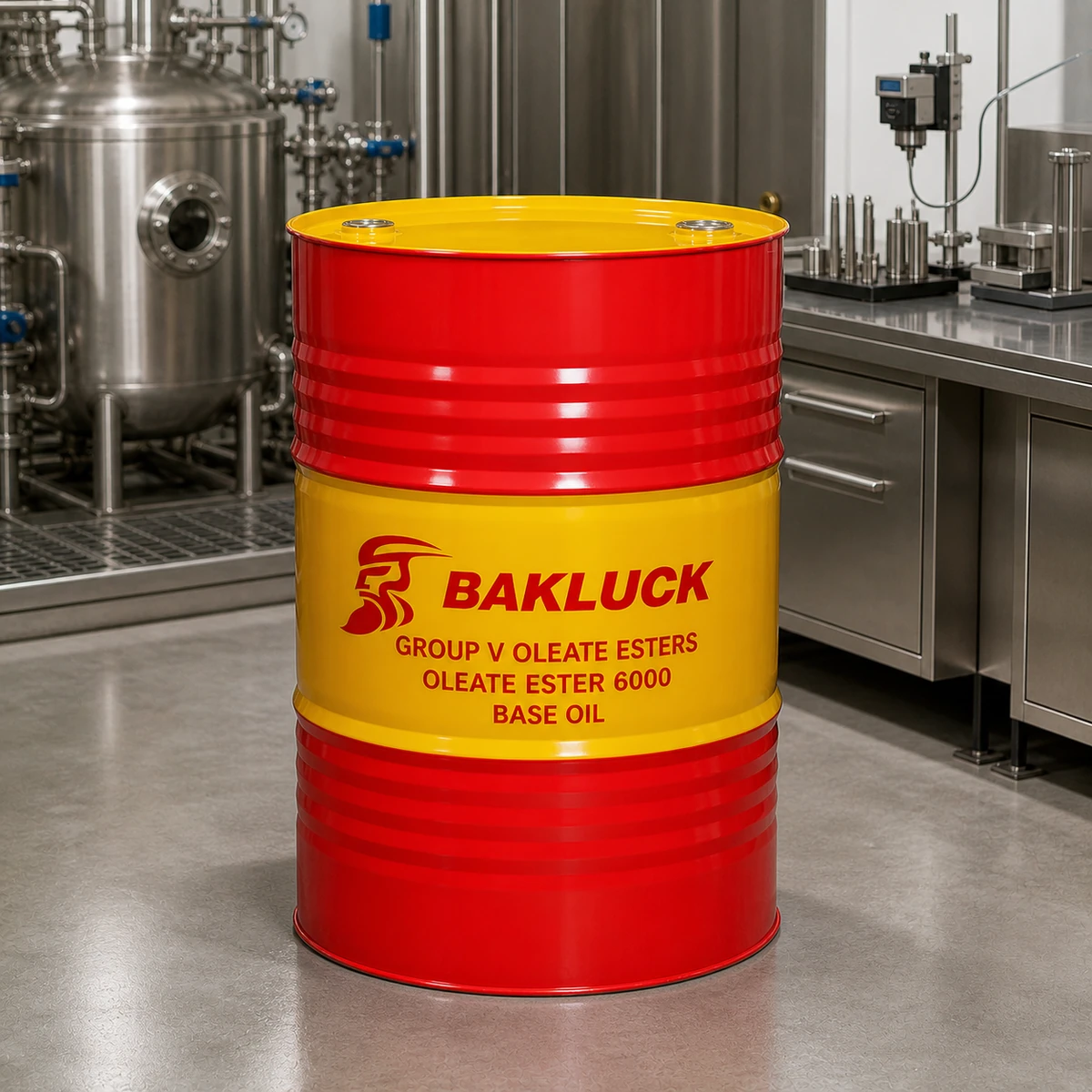
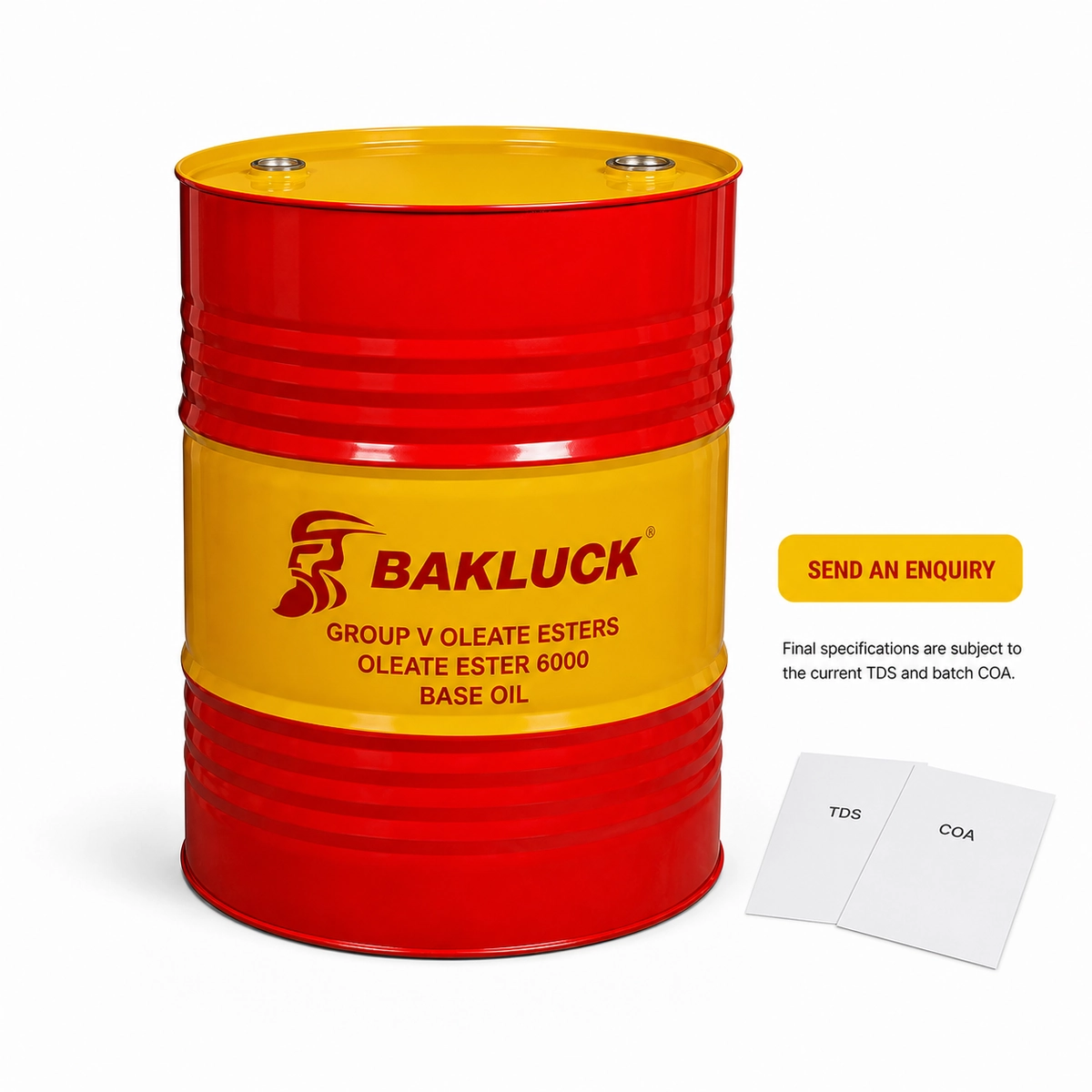
Oleate Ester 6000
Use Oleate Ester 6000’s 9.5 mm²/s 100 °C viscosity to narrow a short list for metalworking-fluid formulation studies, then confirm behavior with additives and co-base stocks.
Product overview
Designed for comparison within ester-based industrial fluids where lubricity and viscosity profile are assessed together, BAKLUCK Oleate Ester 6000 is characterized by more than its commercial grade label. The available table reports density at 20 °C of 0.90 g/cm³ by ASTM D1298, then complements it with kinematic viscosity at 100 °C of 9.5 mm²/s by ASTM D445 and kinematic viscosity at 40 °C of 48 mm²/s by ASTM D445. Those figures can guide early selection for metalworking-fluid formulation studies and frame experimental work on oleate-ester lubricity contribution trials. Because the material is an oleate ester base stock, finished performance will also depend on co-base stocks and additive chemistry. Validate viscosity, volatility, oxidation, materials compatibility and regulatory requirements in the complete formulation. Current BAKLUCK TDS information and the applicable batch COA should be reviewed before procurement approval.
Typical reference values
| Property | Typical value | Method |
|---|---|---|
| Appearance | Yellow transparent viscous liquid | Visual |
| Density at 20 °C | 0.90 g/cm³ | ASTM D1298 |
| Kinematic viscosity at 100 °C | 9.5 mm²/s | ASTM D445 |
| Kinematic viscosity at 40 °C | 48 mm²/s | ASTM D445 |
| Viscosity index | 208 | ASTM D2270 |
| Flash point (COC) | 310 °C | ASTM D92 |
| Pour point | -27 °C | ASTM D97 |
| Acid number | 0.5 mg KOH/g | ASTM D974 |
| Color | 2 | ASTM D1500 |
| Water content | 0.07 % | ASTM D1533 Method B |
Applications
- Metalworking-fluid formulation studies
- Oleate-ester lubricity contribution trials
Frequently asked questions
How can Oleate Ester 6000 be compared without relying on its grade label?
Rather than infer performance from the grade label, compare 9.5 mm²/s 100 °C viscosity with the blend target and run laboratory work for metalworking-fluid formulation studies.
Which results should be available before approving Oleate Ester 6000?
For Oleate Ester 6000, approve the grade only after viscosity, compatibility and performance results meet the finished-fluid target and the lot COA is reviewed.
Final specifications are subject to the current TDS and batch COA.
Product Details
Designed for comparison within ester-based industrial fluids where lubricity and viscosity profile are assessed together, BAKLUCK Oleate Ester 6000 is characterized by more than its commercial grade label. The available table reports density at 20 °C of 0.90 g/cm³ by ASTM D1298, then complements it with kinematic viscosity at 100 °C of 9.5 mm²/s by ASTM D445 and kinematic viscosity at 40 °C of 48 mm²/s by ASTM D445. Those figures can guide early selection for metalworking-fluid formulation studies and frame experimental work on oleate-ester lubricity contribution trials. Because the material is an oleate ester base stock, finished performance will also depend on co-base stocks and additive chemistry. Validate viscosity, volatility, oxidation, materials compatibility and regulatory requirements in the complete formulation. Current BAKLUCK TDS information and the applicable batch COA should be reviewed before procurement approval.
Additive Technology
International Premium Additive Package